


Best Hosting for SEO: What Features Matter?
Why Your Hosting is a Silent Partner in SEO
Think of your website as a high-performance race car. Your content is the powerful engine, and your SEO strategy is the skilled driver. But your web hosting? That’s the chassis, the tires, and the suspension. If your foundation is weak, it doesn’t matter how powerful your engine is—you’ll never win the race. In the digital world, that race is for the top spot on the search engine results page (SERP), and Google is the ultimate race official.

For years, Google has shifted its focus towards user experience. It wants to reward websites that are fast, reliable, and secure. Unsurprisingly, these are all qualities directly dictated by your hosting provider. Let's break down the specific hosting features that matter most for SEO and how you can choose the best hosting for your small business or online project.
The Core Four:
When evaluating a hosting provider, don't just look at the price tag. Dig deeper into these four critical areas that have a direct and measurable impact on your search rankings.
1. Speed and Performance: The Need for Speed
Site speed isn't just a recommendation; it's a confirmed ranking factor for both desktop and mobile searches. A slow website leads to higher bounce rates, lower engagement, and ultimately, lower rankings. Google's Core Web Vitals (CWV) are a set of metrics that measure real-world user experience, and your host plays a massive role in passing this test.

- Largest Contentful Paint (LCP): How quickly the main content of your page loads. This is heavily influenced by your server's response time (also known as Time to First Byte or TTFB).
- Server Hardware: Look for hosts that use modern hardware. SSDs (Solid State Drives) are significantly faster than traditional HDDs. Ample RAM and modern CPUs also prevent bottlenecks during traffic spikes.
- Server-Level Caching: The best hosting for SEO often includes advanced caching solutions (like Varnish, Memcached, or LiteSpeed Cache) that store copies of your site, delivering them to users much faster without needing to run PHP and database queries every time.
- Latest Software Versions: A good host keeps its software stack updated. Running a recent version of PHP (e.g., PHP 8.0+) can make your site dramatically faster than older, outdated versions.
Pro Tip: Use tools like Google PageSpeed Insights and GTmetrix to test your site's speed. If your TTFB is over 500ms, your hosting is likely a bottleneck.
2. Uptime and Reliability: The 'Always On' Factor
What happens when a Googlebot tries to crawl your site, but it's down? It leaves and might not come back for a while. Frequent or prolonged downtime sends a powerful negative signal to search engines: this site is unreliable. If it happens often enough, Google may lower your rankings or even de-index your pages entirely.
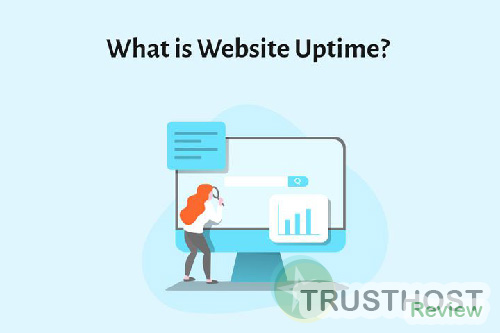
Look for a hosting provider that offers an uptime guarantee of 99.9% or higher. While 99% might sound good, it translates to over 3.5 days of downtime per year. A 99.9% guarantee cuts that down to less than 9 hours per year. The best providers often guarantee 99.95% or even 99.99%.
3. Security: Fortifying Your Digital Fortress
Website security is non-negotiable for SEO. Google is committed to providing safe search results, and it will actively penalize or blacklist sites that are compromised. A security breach can wipe out years of SEO work overnight.
Essential security features from your host should include:
- Free SSL Certificate (Let's Encrypt): HTTPS is a confirmed lightweight ranking signal. An SSL certificate encrypts data between your site and the user, building trust and satisfying a core Google requirement. There's no reason to be on HTTP in 2024.
- Web Application Firewall (WAF): A WAF helps filter out malicious traffic before it even reaches your website.
- Regular Malware Scanning and Removal: Proactive scanning can catch threats early. Some hosts even offer free malware removal, which can be a lifesaver.
- DDoS Protection: Distributed Denial of Service (DDoS) attacks can bring your site down by overwhelming it with traffic. Good hosts have mitigation systems in place.
4. Server Location and CDNs: Closing the Distance
The physical distance between your web server and your visitor matters. If your target audience is in the United States, but your server is in Germany, the data has to travel a long way. This delay, called latency, increases your page load time.
Choose a host that has data centers located close to the majority of your audience. For a global audience, the solution is a Content Delivery Network (CDN). A CDN stores copies of your website's static assets (images, CSS, JavaScript) on a network of servers around the world. When a user visits your site, the CDN delivers the assets from the server closest to them, dramatically reducing latency and improving site speed globally.
Many top-tier hosts, especially in the managed WordPress space, now include a CDN for free with their plans (e.g., Cloudflare or a proprietary CDN).
Comparing Hosting Types for Optimal SEO
The type of hosting you choose sets the stage for your performance. Here’s a quick rundown:
- Shared Hosting: The most affordable hosting option. You share server resources with hundreds of other websites. SEO Impact: Can be slow and unreliable if another site on the server consumes too many resources (the "noisy neighbor" effect). Best for brand new sites with very low traffic.
- VPS (Virtual Private Server) Hosting: A step up from shared. You get a dedicated slice of a server's resources. SEO Impact: Much better performance and stability. A great choice for growing businesses that need more power than shared hosting can provide.
- Managed WordPress Hosting: A specialized solution for WordPress sites. The hosting environment is fine-tuned for WordPress performance and security. SEO Impact: Often the best choice for SEO, as these hosts (like Kinsta, WP Engine, or SiteGround) bundle speed technologies, security features, and expert support.
- Cloud Hosting: Uses a network of connected servers to host your site. SEO Impact: Excellent scalability and reliability. Great for sites with unpredictable traffic spikes, as resources can be scaled up or down on demand.
Top Hosting Providers for SEO Success
While there are many great providers, here are three known for their focus on performance and features that benefit SEO:
- Kinsta: A premium managed WordPress host built on the Google Cloud Platform. They are obsessed with speed, offering top-tier architecture, a high-performance CDN, and robust security. It's a top choice for businesses where performance is paramount.
- SiteGround: A popular choice that strikes an excellent balance between performance and price. They build their own speed and security solutions (like their SuperCacher and AI anti-bot system) and are officially recommended by WordPress.org. A fantastic option for the best hosting for small business.
- WP Engine: Another leader in the managed WordPress space. They provide a comprehensive platform with a focus on speed, security, and developer-friendly tools. Their proprietary caching system (EverCache) is incredibly effective.

Kinsta

Conclusion:
Can your host impact your Google rankings? The answer is a resounding yes. Choosing the cheapest hosting plan might save you a few dollars a month, but it could cost you thousands in lost traffic and revenue due to poor performance, downtime, and security vulnerabilities.
View your hosting not as a monthly expense, but as an investment in your website's SEO foundation. By prioritizing a host that delivers exceptional speed, ironclad uptime, robust security, and a strategic server location, you are setting your business up for long-term success in the search rankings. Don't let a poor foundation crumble your SEO efforts—build on solid ground.
RELATED ARTICLES

What's the Difference Between a Free Host and a Paid Host?
What is a Web Application?

Call to Action (CTA): A Beginner's Guide to Driving Conversions

Keyword Difficulty: A Key to Effective SEO

The Future of Web Hosting in 2026 and Beyond

The Ultimate Glossary of Web Hosting Terms

Best Hosting for a Scalable Startup

What to Do When Your Hosting Provider Has an Outage